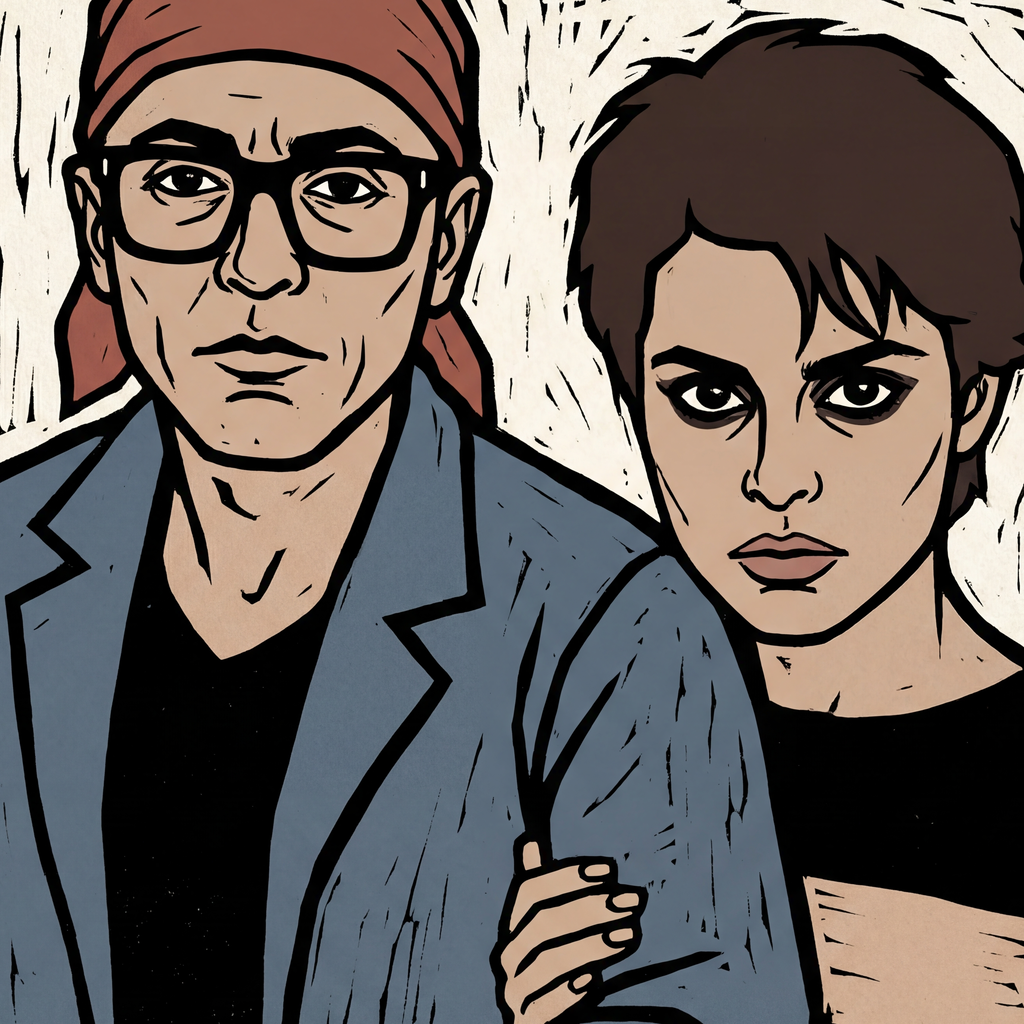
Science Wonder Productions Vienna begins exploring multimedia as a language for complex cultural memory.
Created by Michael Wogenburg
Before the apps, there was a labyrinth.
Michael Wogenburg began building complex interactive media long before mobile apps, AI coding tools, or today's language of algorithmic storytelling existed. The current app family continues a thirty-year practice of turning biography, image, memory, identity, and choice into authored interactive worlds.

The spine of the story
The app-store category is too small.
If the story starts with the app, the reader sees a familiar category and stops there. The correct sequence starts with Science Wonder Productions Vienna, then Visionaries in Exile, then Vienna Walk, then the interruption, then the return through AI-assisted authorship.
Visionaries in Exile turns twenty biographies into a navigable knowledge architecture.
Vienna Walk imagines the city as interactive film, database, guide, map, shop, and cultural encounter.
After profound personal loss, Michael leaves interactive media for many years.
AI-assisted coding lets him build layered authored systems again without flattening their complexity.
Central proof
Visionaries in Exile was not a digital brochure.
It was an interactive knowledge work about Austrian modernist architects in America: a field of lives, buildings, politics, exile, cities, psychoanalysis, art, documents, music, video, and voice. Its deeper achievement was not the amount of material. It was the way the material became navigable.
20architect biographies used as entry points into cultural history.
2,000+images arranged with documents, video, music, text, and archive material.
5 hrsof spoken narration gave the system a guided layer.
pathsthrough people, periods, buildings, movements, and ideas.
Biography
Image
Exile
Architecture
Memory
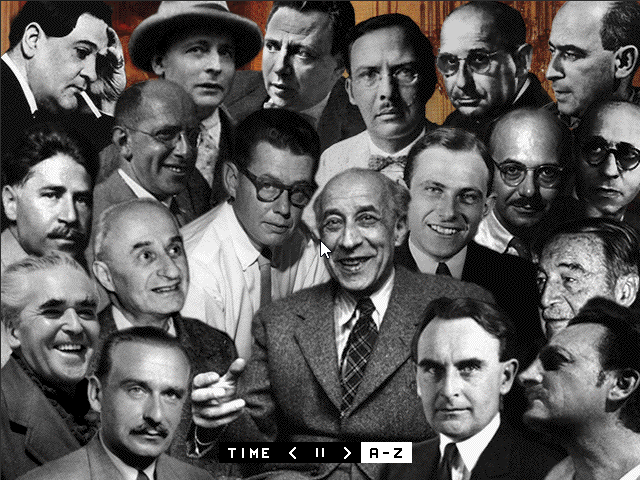
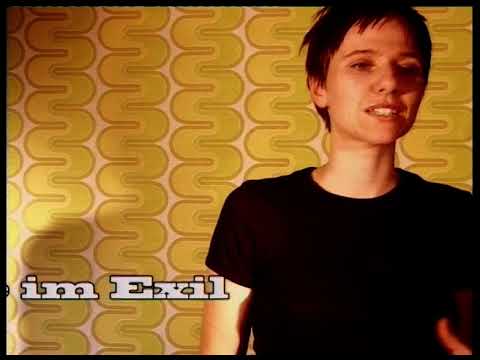 CD-ROM Goes TelevisionWatch the 1996 documentary on YouTube
External evidence
The reviews recognized a system, not a gimmick.
Reviews should not be used as decoration. Each source proves a specific claim: scale, organic navigation, narrative force, media richness, and the rare ability to make a difficult archive feel alive.
Organic navigation
Recognized a near-encyclopedic body of material presented in an organic, fluid form.
Narrative force
Treated the story of the architects as powerfully told through interactive media.
Depth with access
Returned to the same evidence: many possible paths, technical simplicity, breadth, and depth.
The Yamamoto prompt
The app can produce an image-system, not only a text answer.
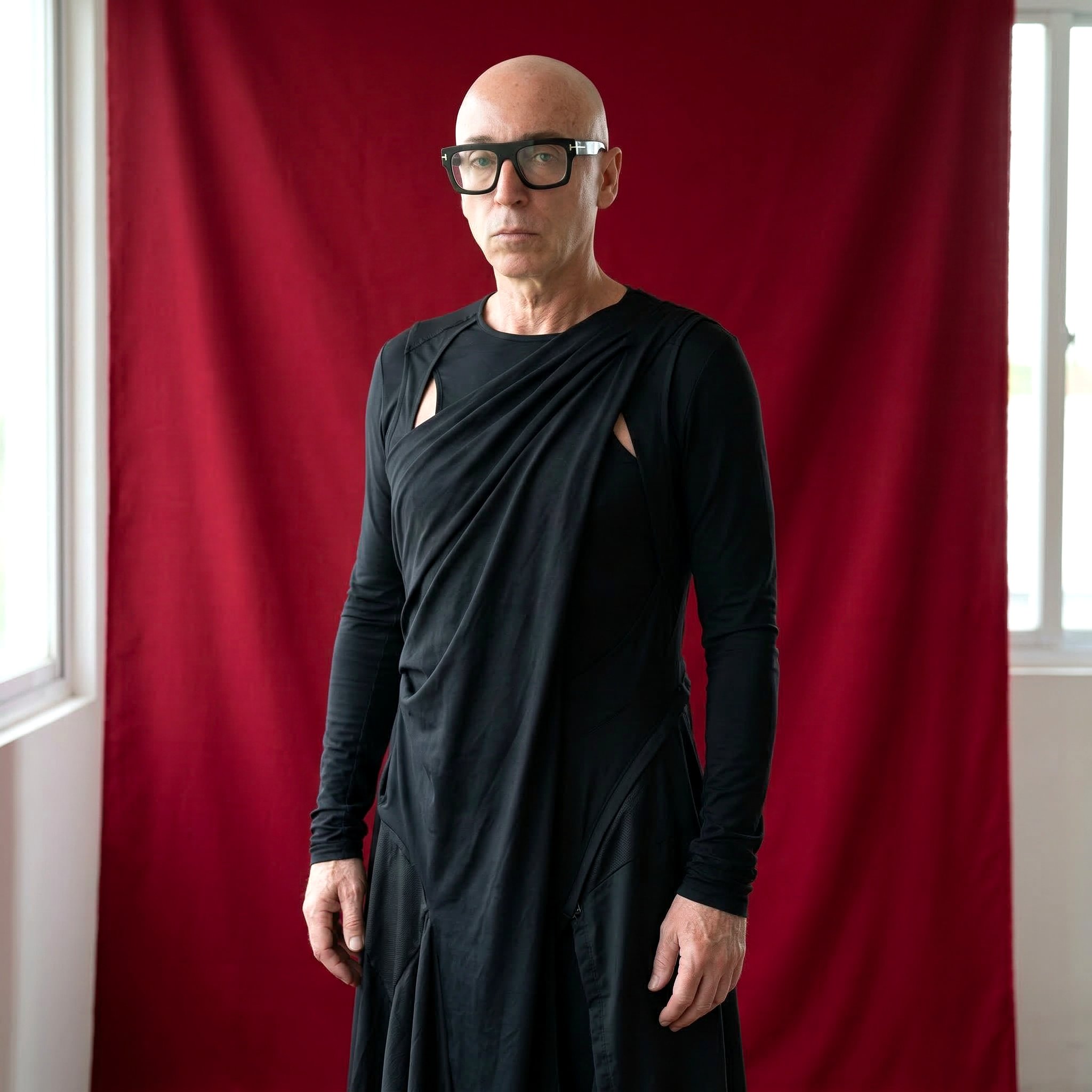
These portraits were produced by 1 in a Billion from an internal prompt Michael calls Yamamoto. The name is used as a creative shorthand for an austere Japanese avant-garde fashion grammar. It is not an affiliation or endorsement.
The prompt asks the system to translate Michael into a precise symbolic field: black asymmetrical clothing, a red wall, theatrical restraint, exposed vulnerability, intellectual severity, and the feeling of a person constructed through choices rather than presented as a normal publicity portrait.


AI-assisted return
AI did not replace the author. It made it possible for the author to stay inside the architecture while building it.
Why this matters for Past Life Contracts
Past Life Contracts is the narrowest version of the same method: one symbolic frame, two people, and a generated contract that turns relationship data into a story.
The apps use ancient and modern symbolic systems as structured languages, but they are not daily horoscope products or fortune-telling entertainment. They belong to a longer authorial lineage: systems where biography, identity, interpretation, emotional patterning, and repeated navigation deepen over time.
One creator story, four apps
The shared source of truth.
This page is generated from one shared creator-story source and published into each app website. The app-specific angle changes, but the proof base stays the same.
1 in a Billion
A relationship system that turns compatibility into a layered, authored reading environment.
Families
A family-field system for reading patterns between relatives, generations, and inherited roles.
UNHINGED
A shadow-comedy matchmaking system that treats mismatch, projection, and red flags as material.
Past Life Contracts
A focused Vedic relationship system built around karmic contract readings between two people.
Source base
Use sources, not scrapbook evidence.
This version uses public links, archive evidence, and a small number of precise claims. It avoids raw PDF collage and decorative CD-ROM snippets.
Restored Visionaries
Best public proof of the original navigation logic.
WIRED review
Independent public recognition from 1996.
TV documentary
Period record of the making and theory behind the CD-ROM.